
Written by the SG Power technical team at SG Power Products Pvt. Ltd. | Last updated: 31 October 2026
Searching for UL listed exothermic powder manufacturers and suppliers usually means a project specification has asked for UL listed exothermic connections. This guide explains what a UL listing covers, how to check one yourself in UL's database, and when Indian projects actually need it.
Whether you are comparing a UL listed exothermic powder supplier or any welding powder maker, the same checks apply. They help you avoid unverifiable claims and order powder and moulds that match your joints.
In short, UL listed exothermic powder is welding powder that UL has evaluated as part of an exothermic welding connection system under UL 467. You can confirm any listing yourself in UL's Product iQ database. Many Indian projects follow IS 3043 and IEEE 80 and do not require UL listing.
| What is listed | Exothermic welding connection systems: powder, mould and conductor combinations |
| Standard | UL 467, Grounding and Bonding Equipment, 11th edition (2022); exothermic connections are covered in its Annex D |
| How to verify | Search the supplier's name or file number in UL's Product iQ database |
| Who usually asks for it | US-based clients, global companies and specifications that follow US codes |
| Common Indian requirements | IS 3043:2018 earthing practice, IEEE 80 design and IEEE 837-2024 connection tests |
| What to ask suppliers | File number, listed products, conductor combinations and the Listing Mark |
A UL listing means UL has tested a product against a published safety standard and checks the factory through follow-up inspections. For exothermic welding, the listing covers connection systems under UL 467. The listed product must carry UL's Listing Mark and appear in UL's online database.
UL, now UL Solutions and originally Underwriters Laboratories, evaluates grounding and bonding products, including exothermic welding systems, to UL 467. The standard's Annex D, added in a 2016 revision, sets requirements for exothermic welding connection systems. This means a listing is tied to specific products and conductor combinations, not to exothermic weld powder in general. In the US, UL is one of several Nationally Recognized Testing Laboratories (NRTLs), so some specifications also accept a UL 467 listing from another NRTL.
| Term | What It Means for Exothermic Powder |
|---|---|
| UL Listed | The product has been evaluated to UL 467 and appears in UL's database with a Listing Mark |
| UL Recognised | A component evaluated for use inside another listed product; not the same as a listing |
| UL Classified | Evaluated for specific properties or uses only |
| “Tested to UL standards” | Not a UL listing; ask for the UL file number |
| UL file number | The reference for a listed company's products, usually starting with “E” |
| UL Product iQ | UL's online database for checking any listing |
| KDER | UL's category code for grounding and bonding equipment |
| NRTL | A US-recognised testing laboratory; UL is one of several |
For more on these terms, read SG Power's guides on what UL listed means and UL listed vs recognised vs classified.
To verify UL listed exothermic powder, ask the supplier for its UL file number and the exact products covered. Then search that file number or company name in UL's Product iQ database, under grounding and bonding equipment. Check that the listed products and conductor sizes match your joints.
Ask for the UL file number: a genuine listing has a file number, usually starting with “E”.
Search UL's database: use UL Product iQ for a UL file number search or a company name search; a free account may be needed.
Check the category: exothermic connections appear under grounding and bonding equipment (UL category code KDER).
Match the details: the listed company, product names, model numbers and conductor combinations must match your order.
Check the mark: the product or pack should carry UL's Listing Mark, and the quote should name the listed products.
Keep the evidence: save the database page with your purchase records for the client or consultant.
| Red Flag | Why It Matters |
|---|---|
| No file number, or “file number on request” only | A real listing can be checked in minutes |
| The company name in the database differs from the seller | The seller may be a trader quoting another maker's listing |
| “UL standard” or “UL tested” instead of “UL listed” | These phrases do not mean the product is listed |
| Listing covers moulds or rods, not the powder or system | Rods and moulds can be listed separately from welding powder |
| UL logo on a brochure but not on the pack | The Listing Mark belongs on the listed product |
| “UL Listed” used as a model name or only in a marketplace title | Sellers write listing titles; only UL's database confirms a listing |
| The mark says “UL Approved” or “UL Pending” | UL marks say Listed, Classified or Certified, never Approved or Pending |
| A Certificate of Compliance but no database entry | A certificate can be old or cover other products; the database shows the current listing |
A genuine UL mark on a pack of UL listed or UL certified exothermic welding powder names the type of certification and links to a file you can check. Older packs carry the Listing Mark, and newer ones may carry UL's Enhanced Mark with the word “Certified”. UL says both remain valid, and “Certified” means the same as Listed.
| Mark Element | What to Check |
|---|---|
| UL logo | The letters UL inside a circle, with the U and L staggered |
| Certification word | “LISTED” on older marks, or “CERTIFIED” on the Enhanced Mark |
| Country code | “US” or another code showing which country's standards were used, where shown |
| File number or control number | A number you can search in UL's Product iQ database |
| Product identity | A product name that matches the database entry for that file |
| QR code (Smart Mark only) | Opens UL's page with the certification details |
Specification says “UL listed”? Share it with us, and we'll help you check what your project needs.
Indian projects need UL listed exothermic powder only when the contract or specification names it. This is common in projects for US-based clients, global data centre and telecom operators, and in designs that follow US electrical codes. Many Indian substations, factories and buildings instead follow IS 3043, IEEE 80 and IEEE 837.
| Project Type | UL Listing Usually Needed? | What the Specification Often Names |
|---|---|---|
| Data centre for a US or global client | Often | UL 467 listed connections, IEEE 837 |
| Telecom sites for global operators | Sometimes | UL listing or IEEE 837, by operator |
| Indian utility substations | Rarely | IEEE 80, IEEE 837, IS 3043 |
| Indian factories and plants | Rarely | IS 3043, IEEE 80 |
| Government and PSU projects | Rarely, but some tenders name UL listing item by item | IS 3043, NBC, project-specific clauses; check each BOQ line |
| Indian Railways projects | Rarely | RDSO specifications and approved-vendor requirements named in the tender |
| Solar and wind plants | Sometimes | IS 3043, IEEE 80, or the EPC's global standard |
Read the earthing clause of your specification carefully. Some name UL listing, some name IEEE 837 tests, and some only ask for “exothermic connections”. If UL is optional or “or equivalent”, ask the consultant which evidence they will accept.
Not sure whether your project needs UL listing? Send us the earthing clause, and we'll explain what it asks for.
UL 467 is a product listing standard, IEEE 837 is a test standard for permanent grounding connections, and IS 3043 is India's code of practice for earthing. They answer different questions, so a specification may name one, two or all three. Knowing the difference helps you meet the clause without overspending.
| Point | UL 467 Listing | IEEE 837 | IS 3043 |
|---|---|---|---|
| What it is | Third-party product listing with factory follow-up | Test method for qualifying permanent connections | Indian code of practice for earthing |
| Who issues it | UL | IEEE | Bureau of Indian Standards |
| What it proves | The listed product met UL's requirements | The connection passed cycling, freeze-thaw, corrosion and fault-current tests | The earthing design follows Indian practice |
| Typical use | US-based and global specifications | Substations and utility specifications | Indian buildings, industry and utilities |
| Current edition | 11th edition (2022) | IEEE 837-2024 | IS 3043:2018 |
IS 3043 covers earthing design and practice, not product listing; the current revision is IS 3043:2018, and older copies circulating online are the 1987 text. IEEE 80 covers substation grounding design, and IEEE 837 tests the joints used in it. IEEE 837-2024 replaced the 2014 edition, and IEEE 80-2013 is under revision, so check the edition named in your specification.
The US National Electrical Code (NFPA 70), section 250.70, lists exothermic welding as an accepted way to connect a grounding electrode conductor. The same section asks for lugs, pressure connectors and clamps to be listed, but does not add that word to exothermic welding. Many US-based specifications still ask for UL listed systems, so follow the contract clause.
The NEC is a US code and applies to an Indian project only when the contract adopts it. Wording can change between NEC editions, so check the edition your specification names before deciding what to buy.
To choose a UL listed exothermic powder supplier, first confirm the listing in UL's database, then check that the listed products match your conductor sizes and joint shapes. After that, compare supply, technical support and price, just as you would for any welding powder.
Is the listing in UL's database, and under which file number?
Which products are listed: powder, moulds or complete connection systems?
Which conductor combinations and joint shapes does the listing cover?
Are you the listed manufacturer, or an authorised distributor?
Will the quote and invoice name the listed products?
Do the moulds and powder you supply belong to the same listed system?
Can you support welder training and the first joints on site?
| Check | Why It Matters |
|---|---|
| Listed system, not just powder | The listing covers powder, mould and conductor combinations together |
| Authorised distributor | A trader may not be able to supply listed products for every size |
| Lead time for listed sizes | Listed products may be imported, so plan ahead |
| Total delivered cost | Listed systems can cost more, so check whether your specification needs them |
Searches for a UL listed exothermic powder supplier in India, near Delhi, Noida or “near me” return many local sellers, but location does not prove a listing. Start with UL's database, not the map. A nearby seller helps only if it is the listed maker or an authorised distributor of a listed system.
Find the listed maker first: search UL's Product iQ database and note the company name and file number.
Ask for authorised distributors: the listed maker can name its distributors in India and Delhi NCR.
Check every local seller: ask for the file number and confirm the company name matches the database.
Treat marketplace titles as claims: “UL listed” or “UL certified” in a listing title or model name still needs checking.
If your specification accepts IS 3043 or IEEE 80 practice instead, SG Power in Sector 62, Noida, can review the clause and quote powder and moulds for your joint list. Call +91-8800803930 or use the contact page.
If your specification does not name UL listing, you can choose exothermic powder and moulds on fit, quality and support. Check cartridge sizes, mould compatibility, packing and the supplier's ability to prepare a full materials list from your earthing drawing. Most Indian earthing projects fall into this group.
SG Power manufactures exothermic welding powder and graphite exothermic moulds for earthing and lightning protection joints. Its moulds comply with IEEE 80 and NBC 2016, as stated in its catalogue. It also supplies earth rods, conductors and tools and accessories from its Ghaziabad factory.
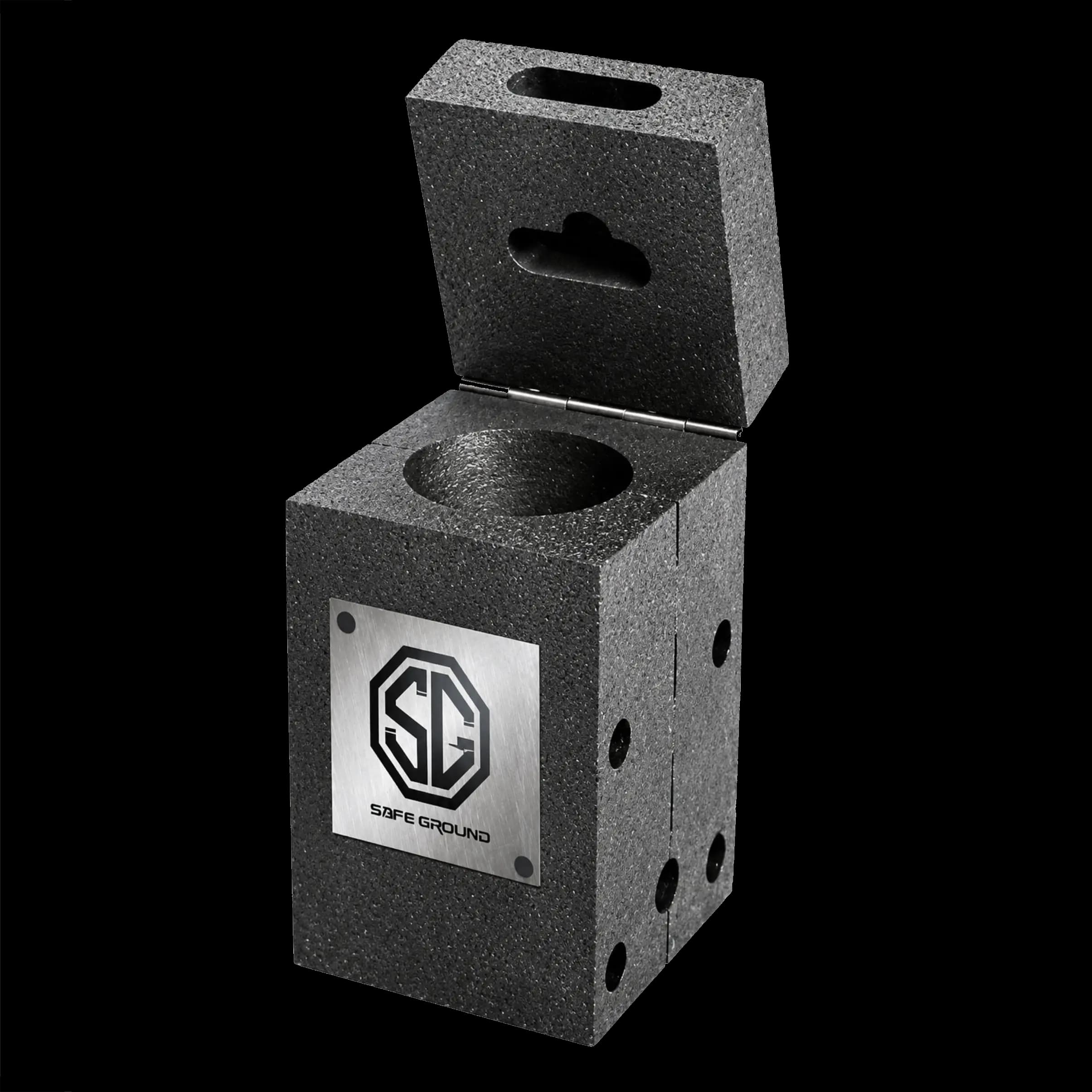
| What You Get From SG Power | Detail |
|---|---|
| Powder matched to moulds | Cartridge weights listed for each joint on your drawing |
| Complete kit | Powder, moulds, handle clamps, igniters and tools from one source |
| Earthing materials | Copper bonded rods, conductors and strips, pit covers and compound |
| Experience | 15+ years, 5,937+ customers in 319+ cities |
| Customer ratings | 4.2/5 on IndiaMART (132 ratings) and 4.4/5 on Google (78 reviews), checked October 2026; read reviews on IndiaMART |
| Honest advice | If your specification requires UL listing, tell us at the enquiry stage and we'll discuss it openly |
Need exothermic powder for a project that follows IS 3043 or IEEE 80? Send your joint list for a quote.
The most common mistake when buying UL listed exothermic powder is accepting “UL” wording without checking UL's database. Other mistakes are buying listed powder with unlisted moulds, assuming every size is listed, and paying for UL listing when the specification does not ask for it. A ten-minute check avoids these mistakes.
| Mistake | Better Approach |
|---|---|
| Trusting a UL logo on a brochure | Search the file number in UL's database |
| Mixing listed powder with another maker's moulds | Use the listed system as one set |
| Assuming all sizes are listed | Match each conductor combination to the listing |
| Buying UL listed products when not required | Check the specification clause first |
| Ignoring IEEE 837 wording | Ask whether IEEE 837 test reports will be accepted instead |
| Comparing foundry or lime “exothermic powder” | Check that the product is welding powder for earthing joints, not a foundry riser or lime slaking powder |
| Forgetting site inspection | Ask whether the specification needs visual checks or X-ray checks on sample joints |
Comparing exothermic powder quotes? Share them with your joint list, and we'll check sizes and moulds. For a deeper guide to buying powder, read how to choose an exothermic welding powder supplier.
These are the main facts about UL listed exothermic powder, in short form for quick reference:
Standard: UL 467, Grounding and Bonding Equipment (11th edition, 2022); exothermic welding connection systems are covered in Annex D.
What is listed: connection systems, meaning powder, mould and conductor combinations, not powder in general.
How to verify: search the file number or company name in UL's Product iQ database.
Official list: UL's Product iQ database, under grounding and bonding equipment (category code KDER).
UL marks: “Listed” on older marks and “Certified” on newer marks mean the same; “Approved” or “Pending” are not UL marks.
Red flags: no file number, “UL tested” wording, or a listing in another company's name.
When needed: only when the specification names it; common for US-based and global clients.
Indian practice: IS 3043:2018 earthing, IEEE 80 design and IEEE 837-2024 connection tests; some government tenders name UL item by item, and Indian Railways follows RDSO specifications.
US NEC 250.70: lists exothermic welding as an accepted connection method; follow your contract if it asks for UL listed systems.
Not required? Choose powder and moulds on fit, quality and support, for example from an exothermic powder manufacturer such as SG Power.
For help choosing exothermic powder, with or without UL listing, share your specification and joint list with SG Power. We'll tell you plainly what your project needs, and if UL listing is not required, we'll quote powder, moulds and accessories matched to your earthing drawing.
This guide is based on published standards, UL's own information and SG Power's catalogue. Engineers and buyers can use these sources to check each point. Standard editions were checked in October 2026.
UL Solutions: grounding and lightning protection component evaluations
IAEI Magazine: how to tell if a UL Listing Mark is counterfeit
UL 467, Grounding and Bonding Equipment, 11th edition (2022)
IEEE 837-2024, Standard for Qualifying Permanent Connections Used in Substation Grounding
IS 3043:2018, Code of Practice for Earthing (Bureau of Indian Standards)
SG Power Products Pvt. Ltd., product catalogue (February 2026)
Standards are revised over time, so always confirm the edition named in your project specification before ordering.
Exothermic welding powder — cartridge sizes, packing, storage and how the powder works.
Exothermic moulds — graphite moulds for cable, rod and strip joints.
Exothermic welding tools and accessories — handle clamps, igniters and cleaning tools.
What does UL listed mean? — the listing process and what the mark covers.
UL listed vs recognised vs classified — the three UL marks, and which one a specification wants.
How to choose an exothermic welding powder supplier — what to ask before you order.